
Where to Get Free Moving Boxes
Good free moving boxes are a lot easier to find than most people think. A lot of local grocery stores, online community groups such as Facebook Marketplace, bookstores, neighbours, or even friends who moved recently are willing to give away reusable moving boxes. But not every box is worth taking, so it is important you check these boxes well and choose the right one to make the moving process smoother and stress-free.
Finding free moving boxes can help lower your moving costs, but it isn’t always the easiest or most reliable option. For the past three years, Stack has helped homeowners and businesses move more efficiently with durable, reusable moving bins delivered directly to their door. Made from recycled plastic, our bins provide a more convenient, sustainable alternative to traditional cardboard boxes and can help customers save up to 40% on moving supplies. Contact Stack today to reserve your moving bins and make your next move a little easier.
In this guide, we’re sharing the best places to find free moving boxes and explaining when they might not be the safest or most practical option for your move.
Table Of Contents
- 21 Best Places to Get Free Moving Boxes Near You
- A. Personal Network
- B. Local Businesses and Institutions
- 4. Your Local Recycling Center
- 5. Big Box Stores
- 6. Your Local Coffee Shop
- 7. Grocery Stores
- 8. Liquor Stores
- 9. Pharmacies
- 10. Bookstores
- 11. Office Supply and Copy Shops
- 12. Nearby Fast-Food Restaurants
- 13. Pet Stores & Veterinary Clinics
- 14. Local Farmers’ Markets
- 15. Schools
- 16. Warehouses & Distribution Centers
- C. Online and Community Platforms
- Are Free Cardboard Moving Boxes Worth It?
- How to Score Free Boxes from Moving Companies and Moving Freebies
- How Many Boxes Do I Need to Move? Plan Before You Start Looking
- When Not to Use Free Moving Boxes
- Need Durable Moving Boxes at an Affordable Price?
- FAQs
21 Best Places to Get Free Moving Boxes Near You
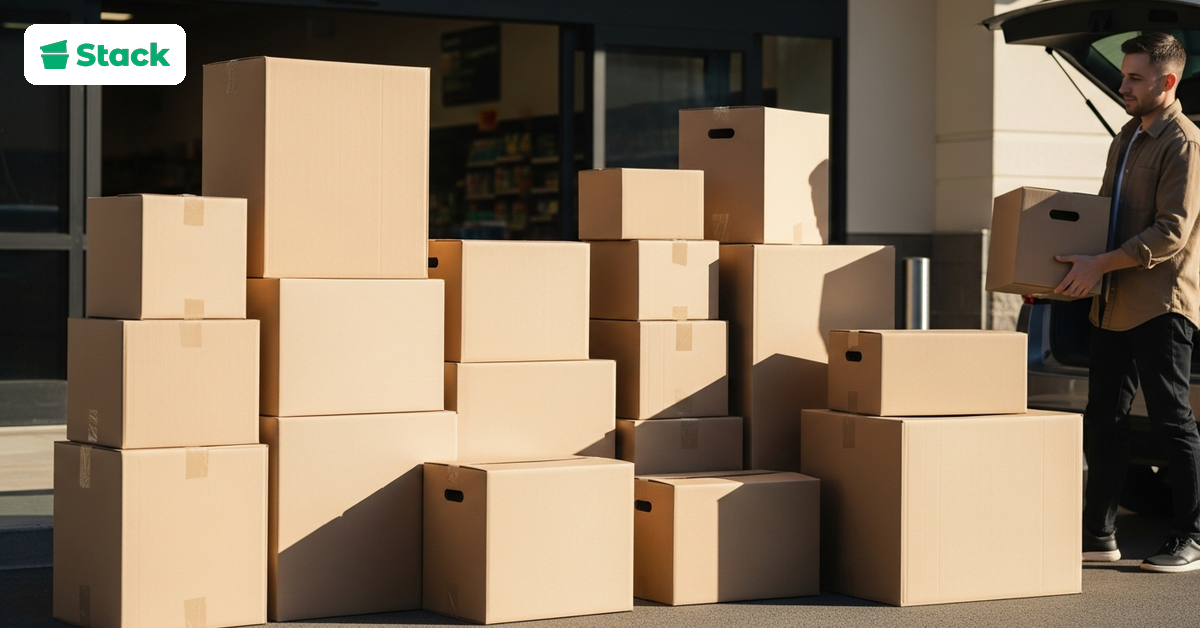
You may find it surprising the number of places that offer free moving boxes, provided you know where to search. To make your search easier, we’ve organized the top places to get free moving boxes into three main categories: local businesses, online community resources, and your personal network.
A. Personal Network
Your personal network is often the easiest and most reliable place to find free moving boxes because the source is someone you already know and trust. Friends, coworkers, neighbors, or family members who’ve recently moved may have boxes in good condition and are usually happy to give them away. This option also lets you ask questions about box quality and how they were used.
1. Someone Who Just Moved
Maybe you know of a friend or neighbor who recently moved to your area and is trying to figure out what to do with the boxes after moving. If they purchased their boxes from a moving company, you will receive standard sizes intended specifically for packing up a home. Spare them the trouble of a trip to the recycling center by hauling their boxes away for your own use.
2. Your Workplace
Many workplaces receive frequent shipments of office supplies, equipment, and inventory, often in sturdy cardboard boxes. Ask your employer or facilities team if employees are allowed to take boxes from the loading dock or storage areas. You can also ask coworkers to save delivery boxes in the weeks leading up to your move for a steady supply.
3. Friends & Relatives
Friends and family members may have extra boxes stored away after past moves or recent deliveries. Because these are people you know, it’s easier to ask about box condition, cleanliness, and prior use. This makes it a convenient option for finding usable boxes without the uncertainty of sourcing them from public locations.
B. Local Businesses and Institutions
Local businesses and institutions receive frequent shipments, which means they regularly deal with leftover cardboard boxes. These locations often give boxes away simply to avoid disposal, making them a convenient option if you’re willing to ask. Box quality can vary widely, so it’s important to check for cleanliness, strength, and damage before using them. The best time to ask for boxes is shortly after goods are offloaded and shelves are restocked. It is best to reach out to the store on time to confirm if the boxes are available before they are taken out and recycled.
4. Your Local Recycling Center
Recycling centers handle all sorts of materials, including cardboard, and may have boxes available if you ask. This can be a convenient option for finding boxes without visiting multiple stores. Some centers have rules, like only giving out clean cardboard, so it’s important to check first.
5. Big Box Stores
Large retailers and department stores often receive shipments in a variety of box sizes, making them a good source for free moving boxes. Stores like Walmart or Target break down boxes immediately after stocking, so inspect each box carefully before taking it. This makes it important to take your time to choose boxes that are in good shape.
6. Your Local Coffee Shop
Your favorite coffee shop could be a great place to find free boxes, especially if it’s closer to home than a box store. Between shipments of equipment, beans, and other supplies, many coffee shops have plenty of empty boxes. The next time you stop in for a latte or a large drip coffee, just ask the barista if they have any boxes you can take off their hands.
7. Grocery Stores
Most local grocery stores restock daily or at least twice weekly, leaving behind a constant supply of empty boxes. Ask the store manager if they have extra you can use. However, sizes and quality can vary, and some boxes may be damaged or wet. Try to check back regularly because it increases your chances of finding boxes that you can actually use.
8. Liquor Stores
A liquor store is even more likely to have extra sturdy boxes since they are designed to transport bottles. While these shops might not receive shipments with the frequency or volume of grocery stores, they tend to save boxes for customers to safely transport their purchases. Some stores may require you to be a customer, but it never hurts to ask.
9. Pharmacies
If you need small- or medium-sized boxes, pharmacies can be a good place to check since they often receive medical supplies in shipments that use boxes of these sizes. The boxes are usually clean and sturdy, making them ideal for packing heavier or delicate items. Many pharmacy staff are happy to give them away rather than throw them out; just ask nicely.
10. Bookstores
Like liquor stores, chain and independent bookstore locations get shipments in sturdy boxes made for supporting heavier loads without collapsing. If you have a lot of books or other heavy items like dishes to pack, bookstores could be a good option for moving boxes.
11. Office Supply and Copy Shops
Copy shops and office supply stores regularly get shipments of paper, office equipment, and even furniture like chairs. This means that they have boxes of varying sizes that may be more resilient than grocery boxes that hold lightweight produce like leafy greens. Since they’re used for dry goods, they’re also more likely to be clean.
12. Nearby Fast-Food Restaurants
Fast food restaurants constantly receive ingredient packages, so they could be a great place to get free boxes. Chances are there’s at least one near your home, and they probably have boxes to spare. As with grocery stores, the condition of boxes could be hit or miss, but with so much turnover, you can check back regularly.
13. Pet Stores & Veterinary Clinics
Pet stores regularly receive shipments of pet food, toys, and other supplies in sturdy cardboard boxes designed to hold weight without breaking. Similarly, veterinary clinics may also have boxes from deliveries of medical equipment, pet medications, or specialty products. These boxes are often clean, durable, and ideal for packing heavier or oddly shaped items. It’s best to ask the store manager or clinic staff if they have any extras available and check the boxes for damage before taking them.
14. Local Farmers’ Markets
Vendors at farmers’ markets frequently receive fresh produce in boxes built to protect items during transport, making them surprisingly strong and reusable for moving. Asking vendors politely at the end of the market day usually yields extra boxes they would otherwise recycle or discard. Be sure to inspect them for cleanliness and sturdiness, especially if you plan to use them for fragile items.
15. Schools
Aside from grocery and retail stores, you could get moving boxes for free by asking at local schools. Learning institutions may receive large deliveries of equipment, textbooks, supplies, sporting goods, canned goods for the cafeteria, and more. Speak to the office staff about any boxes sitting around that you could take off their hands.
16. Warehouses & Distribution Centers
If you know someone who works at a warehouse or distribution center, they often have access to large quantities of sturdy boxes in various sizes. Asking for spare boxes can yield high-quality options for moving. You might also be wondering whether movers provide boxes. Some moving companies do include boxes and packing supplies as part of their service, but not all do. So it’s a good idea to ask ahead of time whether boxes are included or if you’ll need to source them yourself.
C. Online and Community Platforms
Online and community platforms connect you with people in your area who are giving away boxes after a move. These resources make it easy to search locally and respond quickly when boxes become available. These platforms can be unpredictable because the listings can disappear quickly. So to improve your chances of securing a good sturdy box, check frequently and respond to ads promptly.
17. Freecycle
If you’re not having much luck finding free moving boxes at grocery or discount stores, check out some online community groups like Freecycle. This platform aims to keep items out of landfills by encouraging members to swap and reuse items rather than dispose of them.
If the timing is right, you could find free moving boxes to pick up locally on Freecycle. You might not find as many boxes as you need or all the sizes you prefer, but you’ll get them free and reduce waste in the process.
18. Craigslist
If you can’t find anything from local stores, Craigslist is another great online option for free cardboard moving boxes. What makes Craigslist so convenient is that you can search nearby locations and check the “free stuff” section for the items you need. There’s no guarantee you’ll find free moving boxes, but the search is quick and easy, so you lose very little by simply checking in periodically.
19. Facebook Marketplace
Facebook is one of the best online marketplaces for people selling stuff, but you can also get free items (though you’ll typically need to pick them up yourself). If you want to find free moving boxes, all you have to do is search for them after selecting the “Only show free listings” filter. You’ll quickly discover any boxes being offered in your preferred pickup area.
20. Nextdoor.com
Nextdoor.com is designed to connect local groups of neighbors, who can use it to share timely information. When you create an account, you can post a message to ask about any free boxes that people don’t want anymore, or you can browse the “for sale” section. You might get lucky and locate a neighbor who has just completed a move and wants to get rid of some boxes.
21. U-Haul Box Exchange
As a U-Haul customer, you have the option to purchase moving boxes and other moving supplies like bubble wrap and packing tape. If you’re looking for cardboard boxes for free, the brand also makes it easy for customers to trade boxes.
Some locations have a “take a box, leave a box” area where you can not only find gently used boxes but also leave them for others following your move. The company website also has an exchange page where users can post offerings of heavy-duty boxes and leftover supplies to help others prepare for a move on a budget.
Are Free Cardboard Moving Boxes Worth It?
When it comes to moving on a budget, free cardboard boxes can be a great way to reduce costs. But it is not always the best option, and understanding the trade-offs can help you decide if free cardboard boxes are the suitable.
- Quality concerns: Free boxes can vary widely in quality. Some may be worn, dirty, or previously damaged, which can compromise their ability to protect your belongings. Always inspect boxes before using them to avoid surprises during your move.
- Time: Collecting free boxes can be time-consuming. You may need to visit multiple stores and markets or contact people repeatedly to gather enough boxes. This can add stress and take time away from actual packing.
- Transportation issues: Large or oddly shaped boxes may be difficult to transport. You might need extra trips or a larger vehicle to bring them home.
- Pest contamination risks: Used boxes can carry insects or rodents if they weren’t stored properly. Bringing these boxes into your home could lead to infestations. Check for any signs of pests before taking them.
- Mold/mildew risks: Boxes exposed to moisture can grow mold or mildew. This can damage your belongings and create health risks. Only use boxes that are clean and completely dry.
- Structural integrity issues: Boxes that have been used multiple times may be weak or bent. They might collapse under heavy items, putting fragile or valuable belongings at risk. Test the strength before packing heavier items.
- Hidden costs: While the boxes themselves are free, there may be hidden costs such as gas, time spent collecting them, or replacement materials if boxes fail. Consider these when calculating the true value.
- Movers refusing damaged boxes: Some professional movers may refuse to handle boxes that are damaged or weak. This can force you to repack or purchase new boxes at the last minute.
- Environmental waste: While reusing boxes can reduce waste, low-quality or damaged boxes may need to be discarded quickly. This can create more waste than expected.
- Injuries from boxes breaking: Boxes that fail during lifting or carrying can cause injuries. Broken boxes may spill contents or make lifting awkward, increasing the risk of strain or cuts.
How to Score Free Boxes from Moving Companies and Moving Freebies
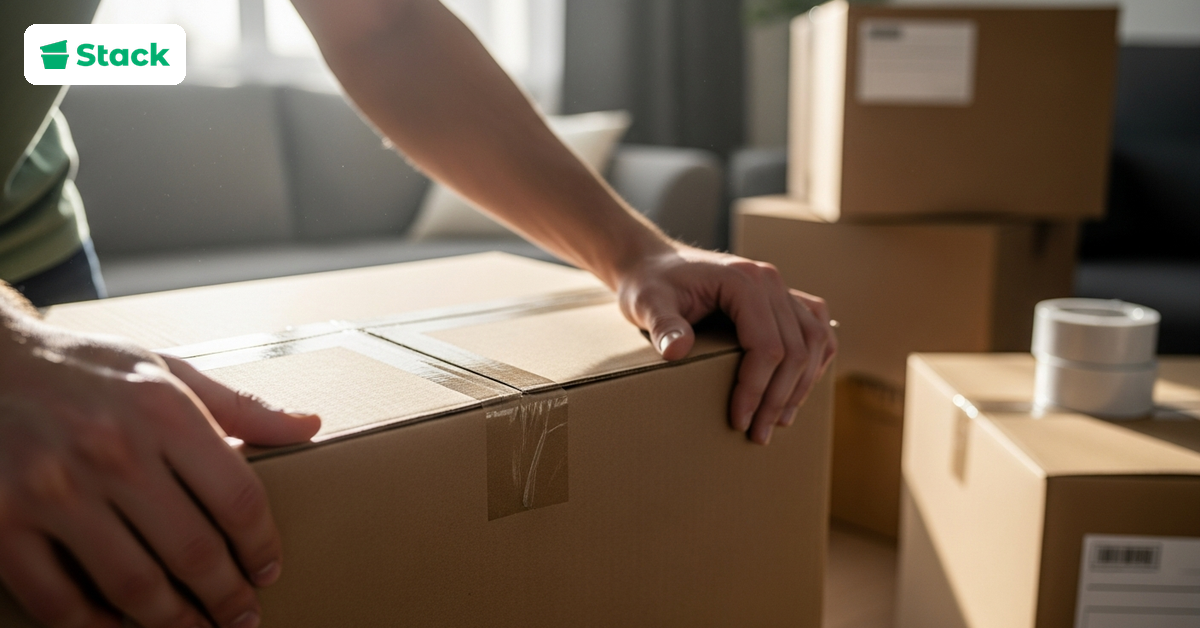
Finding free moving boxes is only part of the process. Choosing the right moving boxes can make the difference between a smooth move and one filled with damaged belongings, wasted time, and unnecessary stress. At Stack Moves, we’ve seen that the people who have the easiest moves don’t necessarily find the most free cardboard boxes; they simply know how to identify quality boxes, avoid common mistakes, and recognize when another option makes more sense. That’s why we recommend following the SAVE Framework before you start collecting boxes for moving. It gives you a practical way to find free moving boxes, evaluate their condition, and decide whether they’re the right fit for your move.
S- Search Smart
Start your search where sturdy cardboard boxes are most likely to be available instead of driving from one store to another hoping to get lucky. Grocery stores, liquor stores, bookstores, office supply stores, coffee shops, and other local stores receive frequent shipments, while Facebook Marketplace, online community groups, and neighbors who recently moved often have extra boxes they’re happy to give away. One mistake people make is waiting until the weekend to start looking, only to discover that many businesses have already recycled their empty boxes or flattened their delivery boxes. Calling ahead can save time and help you find free moving boxes before they’re discarded. Starting your search a week or two before moving day also gives you more flexibility to collect moving boxes in different sizes instead of settling for whatever is left at the last minute.
A- Assess Every Box
Not all free boxes are worth bringing home, even if they look sturdy at first glance. Before packing your belongings, inspect cardboard boxes for water damage, crushed corners, weak seams, mold, odors, or signs of pests because these issues can weaken the box long before you notice a problem. For example, a box that previously held canned goods may appear strong but could fail if moisture has softened the bottom flaps over time. According to the U.S. Environmental Protection Agency (EPA), approximately 46 million tons of paper and paperboard were recycled in 2018, giving paper products a recycling rate of 68.2%, which is the highest among materials in municipal solid waste. Reusing sturdy moving boxes before recycling them can help extend their useful life and reduce unnecessary waste. As Michael Weaeedian puts it, “The strongest box isn’t always the newest one. A quick inspection can help you avoid damaged belongings and unnecessary repacking later.”
V- Verify Your Moving Needs
Before you fill every moving box, think about what you’re actually packing and whether those used boxes are suitable for the job. Lightweight clothing, bedding, and decorations usually work well in free cardboard boxes, while fragile dishes, electronics, artwork, and other valuable belongings often need stronger protection or specialized moving supplies. Many people assume all boxes for moving perform the same, but matching the box to the item inside helps prevent crushed corners, shifting contents, and damaged possessions during transport. If you’re packing heavy books, for example, smaller sturdy boxes are often a safer choice than oversized cartons that become difficult to lift. Taking a few minutes to verify your packing plan before collecting boxes can also help you estimate how many you’ll need and avoid gathering more boxes than necessary.
E- Explore Better Options When It Makes Sense
There’s nothing wrong with using free moving boxes, but they’re not always the best solution for every move. If you’re moving long distance, relocating during rainy weather, packing expensive belongings, or simply want a more organized packing experience, exploring alternatives can save time and reduce risk. Reusable moving bins offer stronger protection than many cheap cardboard boxes, stack securely without collapsing, and arrive clean and ready to use without the need for packing tape or box assembly. We’ve seen many customers combine free moving boxes for lightweight household items with reusable bins for fragile belongings, creating a practical balance between convenience and cost. As Eiusmod Tempor says, “The goal isn’t to avoid free boxes, it’s to choose the packing solution that gives your belongings the protection they deserve.”
How Many Boxes Do I Need to Move? Plan Before You Start Looking
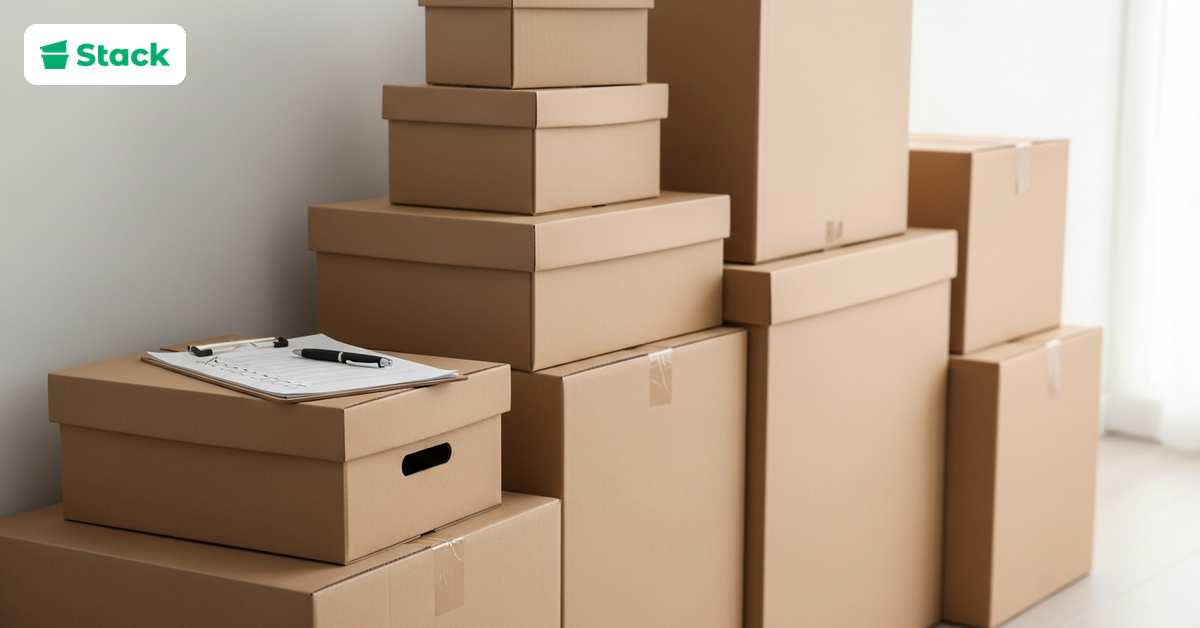
One of the biggest mistakes people make when looking for free moving boxes is collecting boxes before knowing how many they actually need. Planning ahead makes it easier to focus on finding the right sizes, reduces unnecessary trips to different local stores, and helps you avoid ending up with stacks of empty boxes you never use. While every move is different, estimating your moving boxes before you start packing gives you a more organized and less stressful experience. If you can’t find enough free cardboard boxes, you can always supplement them with cheap moving boxes or reusable moving bins for added convenience. The goal isn’t to collect the most boxes; it is to collect the right ones.
Estimated Number of Moving Boxes by Home Size
| Home Size | Estimated Boxes Needed | Best Approach |
|---|---|---|
| Studio or 1-bedroom apartment | 15-30 | Start with free moving boxes from friends, grocery stores, and online community groups, then add a few specialty boxes if needed. |
| 2-bedroom home | 35-50 | Combine free cardboard boxes with sturdy boxes from bookstores or office supply stores for heavier items. |
| 3-bedroom home | 50-75 | Begin collecting boxes several weeks before moving day and include wardrobe or specialty boxes for clothing and fragile belongings. |
| 4-bedroom home or larger | 75-100+ | Plan ahead, gather boxes from multiple sources, and consider reusable moving bins for valuables and frequently used household items. |
The estimates above provide a helpful starting point, but the number of boxes for moving you’ll need also depends on your lifestyle and the items you’re packing. For example, someone with an extensive book collection or a home office will usually need more sturdy boxes than a household with fewer heavy belongings. On the other hand, families with large closets may benefit from wardrobe boxes to protect hanging clothes and speed up unpacking. Planning for these specialty items early makes it easier to prioritize the types of moving supplies you’ll need instead of collecting every box you find. If you’re unsure where to begin, using a moving box calculator can help you estimate your needs more accurately before you start your search.
When Not to Use Free Moving Boxes
While free moving boxes can save money, they aren’t always the safest choice for every situation. Avoid using free boxes for moving expensive items, as worn or low-quality cardboard may not provide the protection your valuables need. Similarly, electronics should never be packed in used boxes, as this increases the risk of damage during transit.
Free boxes are also risky for fragile kitchenware like glass, ceramics, or fine dishes. Weak or warped boxes can collapse under weight, and even small cracks can lead to broken items. For long-distance moves, the repeated handling and stacking of boxes makes durability crucial, so relying on used cardboard could result in torn or crushed boxes by the time you arrive.
Avoid them in rainy or winter climates, since moisture can weaken cardboard and compromise structural integrity. In these cases, investing in sturdy, clean moving boxes ensures your belongings stay safe and dry from start to finish.
Why Renting Boxes Can Be Smarter Than Searching Where to Get Free Moving Boxes
An easy alternative to sourcing free moving boxes is to buy cheap moving boxes from retailers like Home Depot or Lowe’s. Not only are they widely available, but they also help you avoid common issues associated with using free boxes, such as inconsistent quality.
Even with these benefits, renting your moving boxes can be safer, more convenient, and often more cost-effective than buying disposable cardboard. Plastic moving boxes offer far better protection, as they can safely hold heavy items, shield fragile or valuable belongings, and stack neatly without collapsing.
Many rental companies include delivery and pickup in their packages, making the process easier and saving you time and effort. Additionally, movers looking to cut moving costs often prefer renting because it’s a less expensive way to secure high-quality boxes. Not to mention, these reusable boxes reduce waste, making your move more sustainable while keeping your belongings safe from start to finish.
Choosing eco-friendly moving boxes is usually less about buying new products and more about making the most of the materials that are already available. Reusing free moving boxes and passing them along after your move can all help reduce waste while keeping moving costs down. Planning ahead also makes a difference. According to the U.S. Census Bureau, 11.8% of Americans changed residences in 2024, highlighting just how many people move each year and why preparing your packing materials early can save both time and unnecessary purchases. If you can’t find enough quality boxes, reusable moving bins offer another practical, long-lasting alternative that combines convenience with durability.
Free vs Cheap Cardboard Boxes vs Rented Plastic Bins Comparison
| Feature | Free Cardboard Boxes | Cheap Cardboard Boxes | Rented Plastic Bins |
|---|---|---|---|
| Cost | $0 | Low | Medium |
| Durability | Low | Low-Medium | High |
| Eco-Friendliness | Low (single-use) | Low-Medium | High (reusable) |
| Convenience/Availability | Moderate | Moderate | High |
| Reusability | Low | Medium | High |
| Protection for Items | Low | Medium | High |
Need Durable Moving Boxes at an Affordable Price?
Free moving boxes can be a cost-effective way to source packing materials, especially if you’re on a tight budget. However, they also carry safety and hygiene risks, which could lead to damaged or lost belongings and even injuries. A stress-free, more reliable way to find boxes is to rent moving boxes. Renting not only provides better protection for your items, but it’s also more convenient and sustainable, eliminating the need for extra tape, padding, or trips to collect boxes. Many rental services make the process seamless, allowing you to schedule delivery and pickup in just a few minutes.
If you’re ready for a simpler way to pack, Stack Moves offers clean, durable, and reusable moving bins delivered right to your door and picked up when you’re finished. Reserve your moving bins today and make your next move easier, more organized, and less stressful.
FAQs
Still got questions about how to choose the right option for your move? Take a look at our frequently asked questions for some quick, helpful answers. If you don’t see your question here, don’t hesitate to give us a call, and one of our expert team members will be happy to help.
When Is the Best Time to Ask for Boxes?
To increase your chances of getting free boxes, ask at the end of the day or right after a store receives a shipment. Weekdays usually work better than weekends, and being polite to the manager or staff goes a long way.
Is It Ok to Use Free Moving Boxes?
Yes, it is. Just don’t pack heavy, fragile, or valuable items in boxes you haven’t checked. Always make sure they’re clean, sturdy, and not damaged before you start filling them.
What Stores Give Away Free Moving Boxes?
Local businesses such as grocery stores, liquor stores, coffee shops, pharmacies, bookstores, and office supply stores often have extras lying around that they’re willing to give out. Try to stop by around delivery or restocking times and ask politely to boost your chances.
How Many Moving Boxes Do You Need?
It depends on your home and what you’re packing. The easiest way to get an accurate estimate is by using our moving box calculator, which factors in your home size and helps you avoid over- or under-ordering boxes.
Rent Plastic Bins for Your Move!
Moving with cardboard boxes is a pain. Get pre-assembled bins delivered to your door and move hassle-free with Stack!
Stack eliminates the need for you to source, break down, or fill up your trash can with cardboard boxes.